
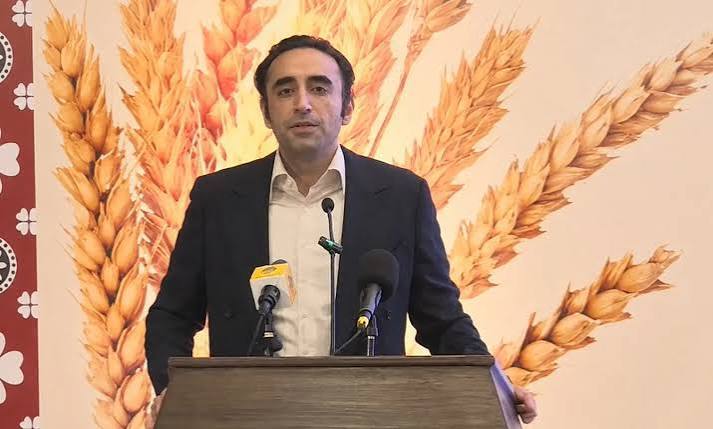

Pakistan Peoples Party (PPP) chairman Bilawal Bhutto Zardari said on Friday that he wants Prime Minister Shehbaz Sharif to finish his term in full. He made the remarks at an event in Karachi while urging political parties to put the economy ahead of their disputes. The comments come at a time of visible tension between the PPP and the ruling PML-N.
Why a Full Term Matters in Pakistan’s Politics
No elected prime minister in Pakistan has ever completed a five-year term since the country came into being in 1947. Governments have fallen through court rulings, dismissals, no-confidence votes and political deals, which has left policy continuity weak. A Shehbaz Sharif five-year term would therefore break a long-standing pattern in the country’s history.
Shehbaz Sharif was elected prime minister by parliament in March 2024, after the general elections held the previous month. His government rests on a coalition in which the PPP has been an important partner. That arrangement has been tested repeatedly, and relations between the two parties have swung between cooperation and open criticism.
What Bilawal Said in Karachi
Speaking at the Sindh Wheat Growers Support Programme 2026, Bilawal argued that no political issue should outweigh the hardship facing ordinary citizens. He pointed to the economic pressure created by the conflict involving the United States, Israel and Iran, and asked that the prime minister be empowered to present a workable way forward. The PPP chairman said his aim was to strengthen the prime minister’s hand rather than to weaken it.
Bilawal also said politicians usually create difficulties for a sitting premier and quietly work for his removal. He made it clear that the PPP would not follow that path. According to him, Shehbaz Sharif has not yet been given a real chance to focus on economic recovery, because his plans are often challenged inside his own cabinet.
He suggested that some federal ministers object to the prime minister’s proposals and push their own agendas instead. This was a pointed remark about discord within the federal government, and it was the part of his speech most likely to draw a response from the PML-N. Bilawal did not name any minister in the remarks reported so far.
Key Remarks and Reactions
Bilawal said he was making these statements because he foresaw difficult days ahead for the country. In his view, the public is not interested in how many provinces Pakistan has, and the real worry for families is getting two meals a day. He revived the PPP’s old slogan of roti, kapra aur makan to underline that point.
The speech should be read against the events of the past week. Earlier this week, Defence Minister Khawaja Asif responded sharply to Bilawal’s call for a political reset, asking on social media whether the PPP’s own hands were clean, as reported by The Express Tribune. Asif noted that the PPP has governed Sindh for 18 years and has partnered with the PML-N at the centre since 2022. Friday’s speech was therefore widely seen as a softer, more conciliatory tone from the PPP chairman.
Rana Sanaullah, the prime minister’s adviser on political affairs, has previously said the two parties are rivals and not enemies, and that top-level dialogue can ease tensions. That position suggests the door to reconciliation remains open on both sides, even as public exchanges continue. Neither party has yet announced any formal negotiation on the matter.
What It Means for the Coalition and the Economy
The PPP’s public backing matters because the government depends on stable partnerships to pass legislation and keep policy on track. A clear signal of support for a Shehbaz Sharif five-year term reduces the risk of a sudden coalition breakdown, at least in rhetoric. It also gives the prime minister some room to focus on reforms rather than on defending his position.
The economic backdrop explains the urgency of the message. Households are struggling with rising prices, and a recent survey reported that inflation has pushed most Peshawar families into debt. Exporters are also waiting on reforms such as the new FBR refund system, which is expected to go live by December.
Regional developments add to the pressure. Fresh attacks linked to the Iran conflict, including the drone strike on a US base in Bahrain, keep energy prices and investor sentiment uncertain. At the same time, Islamabad is working to widen its trade partnerships, as seen in the recent Pakistan-ASEAN trade and investment talks. Political stability in Pakistan is a basic requirement for any of these efforts to succeed.
Critics may argue that political support alone cannot fix structural weaknesses in the economy. Supporters of the idea counter that policy continuity is a precondition for any lasting reform. Both views point to the same reality: a government that survives its term is better placed to deliver results, but it still has to deliver them.
What Comes Next
The coming weeks will show whether Bilawal’s remarks mark a genuine thaw or only a pause in a wider dispute. Much will depend on how the PML-N leadership responds, and whether senior figures from both parties meet to settle their differences. The debate over new provinces, which the PPP chairman dismissed as secondary to public hunger, is also likely to stay in the headlines.
For now, the message from Karachi is clear: the PPP says it will not work against the prime minister’s tenure. Whether that promise holds will be tested by the next budget, the next legislative fight and the next round of public statements. This story is developing, and further reactions from the government are expected.
For more updates, follow the latest reports in our Pakistan and National sections.
Frequently Asked Questions (FAQs)
1. What did Bilawal Bhutto Zardari say about Prime Minister Shehbaz Sharif?
Bilawal Bhutto Zardari said he wants Shehbaz Sharif to become the first prime minister of Pakistan to complete a full five-year term. He made the statement at an event in Karachi on November 20, 2026. He explained that his aim is to strengthen the prime minister’s hand so that he can focus on the economic crisis. He also said the PPP will not plot against the prime minister, which he described as the usual habit of politicians.
2. Why has no prime minister in Pakistan completed a five-year term?
Since 1947, no elected prime minister has finished a full five-year term in office. Governments have been brought down by court decisions, presidential dismissals, no-confidence motions and wider political crises. This pattern has made long-term planning difficult, because each change of government often brings changes in economic and foreign policy. A completed term would therefore be a rare milestone for Pakistan’s democratic system.
3. When did Shehbaz Sharif start his current term as prime minister?
Shehbaz Sharif was elected prime minister by the National Assembly in March 2024, following the general elections held in February 2024. This was his second time in the office. He leads a coalition government in which the PML-N is the largest party and the PPP is a key partner. A full five-year term would carry the government through to the next general election cycle.
4. How has the PPP-PML-N relationship been in recent days?
Relations have been uneven. Earlier this week, Bilawal called for a political reset, and Defence Minister Khawaja Asif replied by questioning the PPP’s own record in Sindh. Bilawal’s remarks on Friday, however, struck a more supportive tone toward the prime minister himself. Senior figures such as Rana Sanaullah have said in the past that top-level dialogue can ease tensions between the two parties.
5. What economic problems did Bilawal highlight?
Bilawal pointed to the economic pressure facing the country, which he linked to the conflict involving the United States, Israel and Iran. He said the main worry of the public is access to basic food, not the number of provinces in the country. He recalled the PPP’s historic slogan of roti, kapra aur makan to stress that bread-and-butter issues come first. He also said the prime minister has not had enough space to focus on the economy.
6. Did Bilawal criticise anyone in the federal government?
Bilawal hinted at disagreements inside the federal cabinet. He said that when the prime minister makes a plan, some federal ministers object and present their own agenda to divert the discussion. He did not name any minister in the remarks reported so far. The comment is likely to draw attention because it suggests that the difficulty lies within the government rather than with the PPP.
7. How could this statement affect political stability in Pakistan?
Public backing from a major coalition partner lowers the immediate risk of a political crisis and gives the government more confidence to push reforms. It can also reassure markets and international partners who prefer predictable policy. However, the effect depends on whether the PPP and PML-N can manage their differences privately instead of through public exchanges. Stability will ultimately be judged by actions in parliament, not only by speeches.
8. What happens next?
The next step will be the response from the PML-N leadership and any meetings between senior leaders of both parties. Observers will also watch upcoming legislative and budget decisions, where the PPP’s support will be tested in practice. Debate over the creation of new provinces is also expected to continue. As the story develops, further official statements are likely.