
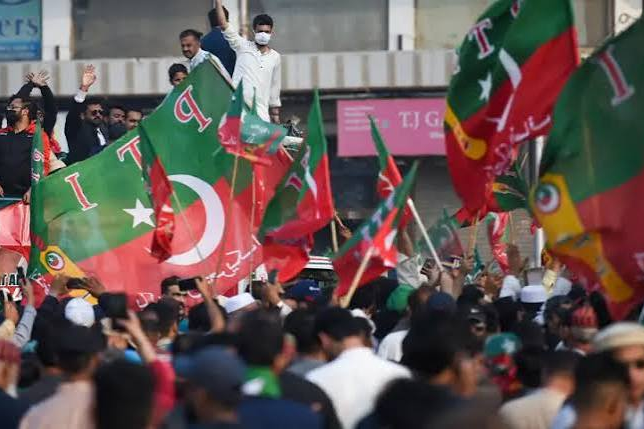

PTI MNAs whereabouts have become the central question in the National Assembly, as party lawmakers demand to know where their detained Khyber Pakhtunkhwa colleagues are being held. They are also asking that every detained leader be produced before a court without further delay. The demand adds fresh pressure on the government over the continuing detentions that followed the emergency and governor’s rule in the province.
Background: How the Crisis Began
The row traces back to October 11, 2026, when the federal government imposed an emergency and governor’s rule in Khyber Pakhtunkhwa. This happened while Chief Minister Sohail Afridi was leading a PTI long march. Reports say Afridi and seven other party leaders were taken into protective custody just hours before the order was announced.
Those detained reportedly included provincial assembly Speaker Babar Saleem Swati and PTI provincial president Junaid Akbar. Since then, the party says the number of its affected lawmakers and workers has kept growing. PTI chairman Barrister Gohar Ali Khan claimed in November that 12 party MNAs and 14 MPAs had been picked up, a figure the party has used in court and in parliament.
The emergency has also moved through the courts. The Peshawar High Court issued notices to the relevant authorities and has been hearing a challenge to the emergency and governor’s rule. Separately, opposition leaders Mahmood Khan Achakzai and Allama Nasir Abbas approached the Federal Constitutional Court, asking for the release of Afridi and other detained parliamentarians.
Details: What PTI Lawmakers Are Asking For
PTI MNAs whereabouts are now being raised on the floor of the house and outside it. The party’s lawmakers say that families, lawyers and colleagues still cannot confirm where several leaders are being kept. They argue that if a person is in lawful custody, the authorities should say where, under which charges, and on whose orders.
The second demand is court production. Under legal norms, anyone detained must be presented before a magistrate or a court so that the legality of the detention can be examined. PTI lawmakers say this has not happened for many of the leaders, and they want the courts to see them in person.
The party is also pressing the National Assembly speaker on production orders. Rule 108 of the Rules of Procedure and Conduct of Business, 2007, allows the speaker to order that a detained member be brought to attend a session. Production orders were issued for arrested PTI MNAs in earlier episodes, including in October this year, and the party says the same principle should apply now.
Opposition benches argue that the issue goes beyond one party. Their point is that detained members are elected representatives, and their absence leaves thousands of voters without a voice in the house. The government has so far defended its actions as security measures taken in a deteriorating law and order situation.
Quotes: What Leaders and Experts Are Saying
Mahmood Khan Achakzai, the opposition leader in the National Assembly, has questioned why production orders have not been issued for detained lawmakers. He has argued that issuing them is the speaker’s responsibility, even when a member is accused of a serious offence.
Barrister Gohar Ali Khan told the Peshawar High Court hearing that his party’s mandate had been snatched away. He said the chief minister and the provincial assembly speaker were missing and that their whereabouts were unknown. Petitioners in the Federal Constitutional Court have likewise asked that all affected lawmakers be produced so that their condition and the legality of their detention can be examined.
Legal observers generally note that courts have repeatedly stressed that no citizen can be held without being told the grounds and the place of detention. They add that the Constitution guarantees a detained person the right to appear before a magistrate within 24 hours, with limited exceptions for preventive detention under specific laws.
Impact: Why It Matters for Politics and Governance
The standoff is likely to shape the mood of parliament in the coming weeks. Every session where detained members are absent gives the opposition a reason to protest, which can slow legislation and deepen the divide between treasury and opposition benches. It also keeps attention on how far preventive custody can be used against elected representatives.
For Khyber Pakhtunkhwa, the effect is felt in daily governance. With the chief minister described as non-functional and the speaker detained, the province is being run under governor’s rule, and critics say this weakens provincial autonomy. Supporters of the emergency counter that restoring order must come first in a province facing a serious militancy threat, as recent counter-terrorism operations near Peshawar show.
Rights groups and bar associations will also be watching how the courts respond. A clear ruling on production and disclosure of detention places could set a useful precedent for future cases, whichever party is in power.
Conclusion: What Happens Next
The next steps depend largely on the courts and the National Assembly speaker. The Peshawar High Court and the Federal Constitutional Court are both dealing with petitions, and their directions on disclosure and production could settle the matter quickly. The speaker’s decision on production orders under Rule 108 will be equally important.
Until the authorities give a clear account, PTI MNAs whereabouts will remain a major political issue and a test of how parliament balances security with the rights of elected members. Pakistan Publications Inc will continue to follow the story as it develops.
Read more: Three TTP Terrorists Killed in Peshawar as CTD and Army Foil Planned Attacks | Bilawal Bhutto Zardari Backs Shehbaz Sharif for a Full Five-Year Term | Inflation Pushes Nearly 9 in 10 Peshawar Families Into Debt | More in Pakistan and National
Frequently Asked Questions (FAQs)
1. Why are PTI MNAs demanding to know the whereabouts of detained leaders?
PTI lawmakers say their party leaders were detained after the emergency and governor’s rule in Khyber Pakhtunkhwa, and that families and lawyers have not been told where several of them are being held. They argue that every detained person has a legal right to be informed of the place and grounds of custody. Without that information, the party says it cannot arrange legal help, meet the detainees or confirm their health and safety. The demand is therefore both a legal and a humanitarian one.
2. What does “court production” mean in this case?
Court production means bringing a detained person physically before a court or magistrate so that a judge can see them and examine whether the detention is lawful. It is a basic safeguard against illegal or secret custody. PTI wants all its detained leaders produced in this way, so that judges can decide on bail, remand or release based on the actual charges. It is different from a production order from the speaker, which allows a detained member to attend a parliamentary session.
3. What are production orders for lawmakers, and who issues them?
Production orders are directions issued by the National Assembly speaker under Rule 108 of the Rules of Procedure and Conduct of Business, 2007. They require the authorities to bring a detained member to the house so that he or she can attend the session, after which the member is returned to custody. Such orders were issued for arrested PTI MNAs earlier this year and in October. PTI now wants them for the detained KP lawmakers as well, arguing that elected members should not be kept away from parliament.
3. Which leaders are at the centre of this dispute?
Reports name suspended Chief Minister Sohail Afridi and Khyber Pakhtunkhwa Assembly Speaker Babar Saleem Swati among those taken into protective custody at the start of the emergency. PTI provincial president Junaid Akbar was also reported detained, along with other lawmakers and workers. The party claims that a dozen MNAs and more than a dozen MPAs have been affected, though exact numbers differ between party and official accounts.
4. What has the government said about the detentions?
Government representatives have generally said that the measures were taken because of law and order concerns and the worsening security situation in Khyber Pakhtunkhwa. They have described some detentions as preventive or protective custody and others as arrests linked to ongoing investigations. Details of individual cases have been limited, which is why the opposition keeps asking for clear answers in parliament and in court.
5. Which courts are hearing the matter?
The Peshawar High Court has been hearing challenges to the emergency and governor’s rule and has asked authorities to respond. In addition, opposition leaders including Mahmood Khan Achakzai and Allama Nasir Abbas have petitioned the Federal Constitutional Court seeking the release and production of Sohail Afridi and other detained parliamentarians. The outcome of these hearings could decide whether the detainees are disclosed, produced or freed.
6. What happens next?
The next developments depend on court directions and on whether the National Assembly speaker issues production orders. If the courts order disclosure and production, the authorities will have to present the detained leaders and justify the custody. If not, the opposition is expected to keep protesting in the house and in the courts, so the issue is likely to stay in the headlines in the coming days.